

Are humans ever truly free or are we living in a perpetual illusion?
What does freedom really mean? A look back just a few decades immediately reveals many things that, from today’s perspective, appear as infringements on personal liberty. For instance, women did not have the right to vote. Until the 1970s in Germany, they were not even allowed to hold a job without their husband’s permission. In the UK census, the term “head of household” was reserved exclusively for men even as late as 2001. Prevailing gender roles confined women to the role of the industrious wife and homemaker. Advertisements from the 1950s and 60s attributed thoughts to women such as: “A woman has two life questions: What shall I wear, and what shall I cook?”
At the same time, surveys from that era show that many women did not feel uncomfortable in this role. In a 1958 survey conducted in West Germany, 55% of men and a staggering 61% of women supported the introduction of a law that would prohibit mothers with children under the age of ten from working. From a modern viewpoint, such a law would be a massive violation of a woman’s fundamental rights. One might speculate: “They simply didn’t know any better back then, they didn’t know any other way.” Society has clearly transformed since then. Today, we speak of equality and freedom in many countries around the world.
But what if we simply don’t know any better today either? What if, in fifty years, we look back and say: “Something like that would be unthinkable today!” What if we are not truly free today, but are merely living in an illusion of freedom because we know no alternative? Would we even recognize it if we weren’t free?
Let us take a look at the lives of different people, men and women in our modern world, and consider how free we actually are. To make the concept of personal freedom more tangible, we shall examine it on three levels. First, there is formal freedom. The rights and opportunities available to us, the freedom to vote, to work, and to live as we choose. Then, there is social freedom. The question of how much it “costs” to deviate from expectations. The consequences one faces when choosing a path different from the one intended for them. And finally, there is inner freedom. The elusive ability to distinguish between one’s own convictions and adopted ideas, to recognize whether a desire is truly one’s own or the result of lifelong conditioning.
Humans always evaluate their freedom relative to what they know.
This multi-layered perspective perhaps reveals the core of the problem. People rarely judge their freedom in absolute terms. They measure it against what they know and what is considered “normal” in their environment. This is exactly what makes freedom so difficult to identify, especially when it is missing.
Anna
Anna is 38, a project manager at a medium-sized company, and a mother of two. It is 6:15 AM when her alarm rings. Over a coffee in the kitchen, she skims her emails on her phone. Two new messages from her boss. Nothing urgent, but she’ll have to take care of them. Until then, they remain in the back of her mind. Then, the practiced routine begins. While her husband prepares the lunchboxes, Anna ensures the children haven’t forgotten anything. Is the gym gear packed? On her way to work, she drops the children off at school. At the office, Anna works with focus and authority, making decisions. She likes her job. She has worked hard for a long time to be independent, to earn her own money, and to be taken seriously. After the birth of her second child, she completed a bachelor’s degree via distance learning alongside her job. If you asked her if she is free, she would likely nod. She can work. She can have a career. She has opportunities her mother never had.
Yet, her day often feels like a chain of obligations. At 1:30 PM, she is back in the car. She works part-time and often works from home in the afternoons to be with the children. While the pasta water boils, she quickly replies to a message from the office. Then: grocery shopping, homework, a brief argument between the kids, the orthodontist appointment. It’s not that anyone tells her what to do. No one forbids her from doing anything. And yet, there are expectations. Who stays home when a child is sick? Who remembers the parents’ evening, birthdays, and family appointments? Much of this is never discussed. It just happens.
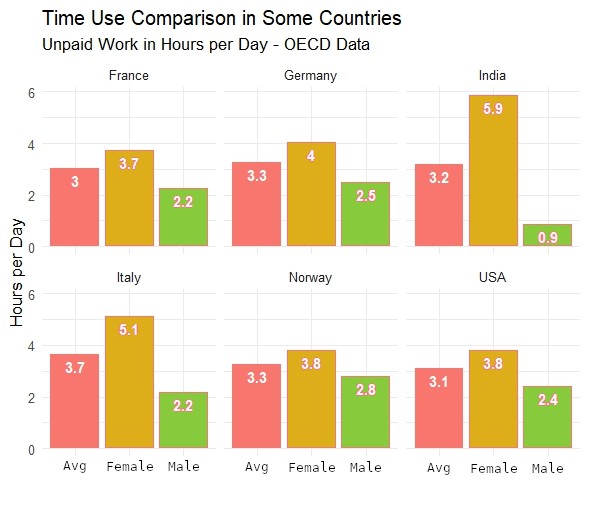
Anna would not say she is being forced. Many of her decisions feel right. She wants to be there for her children. She wants to do her job well. However, what feels like a free choice does not emerge independently of what is considered “given.” Formally, Anna is free. She is allowed to shape her life. Socially, this freedom is limited by expectations that are rarely voiced but remain powerful.
If Anna were to step out of her routine for a single day, there would be no legal consequences, but there would be significant social costs. At work, she would quickly be deemed unreliable; important decisions would be made without her, projects would stall, and her reputation might be permanently damaged. At home, responsibilities would be left unattended. Appointments would be forgotten, routines disrupted, the mood would sour, she would be a disappointment. It is not overt coercion, but a system that relies on her functioning.
Anna is a conscientious person. She wants people to be able to rely on her. This influences her inner freedom. Her decisions stem not only from external expectations but also from her own desire to do justice to everything. This makes it difficult to recognize where her own will ends and her conditioning begins. Where is the line between what she decides for herself and what she has learned to perceive as “right”?
So, is Anna free? In many ways, yes. But she moves within boundaries that she herself may not even perceive as such.
Mohit
Mohit is 24 and lives in a city in northern India. He works as a photographer. When he is out with his camera, walking through the streets, he seems free. He speaks of light, of perspectives, and of moving to Europe one day. At home, he rarely speaks of these things. His parents have other plans. They expect him to marry, start a family, and take on responsibility. They already have a woman in mind for him, he barely knows her. It is not as if anyone legally dictates whom he is allowed to love or marry.
The caste system has been officially abolished. And yet, it remains present, in the minds of his family, in what is considered “right.” Mohit is in love. The woman he loves comes from a lower caste. His parents know about it. They have made it clear to him that this relationship has no future. Should he defy them, there would be no legal consequences. But the fallout would be real. He would disappoint his family, perhaps lose contact, and the support he has relied on until now. Decisions concerning his life would no longer be carried together with him, but made against him. It is not a visible coercion, no one is forcing him with violence. But everything around him makes it clear what price he would have to pay for choosing differently.
Mohit does not say he is unfree. He respects his parents. He understands their expectations. A part of him wants to live up to them. And the more he adopts their perspective, the harder it becomes to distinguish his own desires from theirs. Formally, Mohit is free. Socially, this freedom is tightly bound to loyalty, heritage, and expectations. And internally, he moves between what he feels and what he believes is right. So, is Mohit free? Or does he only make decisions within boundaries that no one forces upon him, but no one really allows him to question either?
Emily
Emily is 31 and lives with her husband in a suburb of Richmond, Virginia. The house is bright, the kitchen tidy, the daily routine clearly structured. She rises early, prepares breakfast, and takes care of the household. Her husband works full-time, she gave up her job several years ago. On social media, she shares insights into her life as a modern “trad wife.” She talks about how much she enjoys focusing on family and home, how fulfilling it is not to be constantly torn between work and private life. For her, this is not a restriction, but a conscious choice. If you asked her if she is free, she would agree without hesitation.
And formally, she is. She would be allowed to work, she could shape her life differently. No one forbids her from taking a different path. Her decision seems clear. Yet here, too, the question of the price of deviation arises. If Emily decided tomorrow to go back to work full-time, it would mean more than just organizational changes. It would challenge the image she has built of herself and the image others expect of her. The dynamics of her relationship would shift, the clear distribution of roles upon which her daily life is based would begin to falter.
Emily does not see herself as restricted. On the contrary, she feels she has consciously chosen against another model that she experienced as stressful and alienating. Her decision is not forced, but it does not arise independently of the images that shape her environment. Of ideas about what a good life is, what femininity means, what appears “right.” Submission to her husband is also, for her, a sign of her strong Christian faith. Formally, Emily is free. Socially, she moves within a clear, stable framework. And internally, she too may move between what she wants and what she has learned to want. Is Emily free? Or has she chosen to live within a system that suggests certain decisions more strongly than others?
Amira
Amira is 26 and lives in a suburb of Paris. She is a student and works part-time in a café. When she leaves the house in the morning, she puts on her headscarf. It is a conscious moment, a decision she makes anew every day. For her, it is part of her faith. It gives her structure, orientation, and a sense of identity. She says it helps her focus on what is important to her. If you asked her if she feels free, she would likely say yes. And formally, she is. She lives in a country where she can shape her own life. She studies, she works, and she moves freely in public spaces.
At the same time, her decision meets resistance. In France, the wearing of religious symbols is restricted in certain public areas. Time and again, she experiences looks, comments, and discussions, sometimes overt, sometimes subtle. If she decided to take off the headscarf, there would be no legal consequences. But it would change something in her relationship with herself, her faith, and her family. Expectations that are not always voiced would shift. Amira’s choice of how to live also does not emerge in a vacuum. It is embedded in an environment that provides her with certain meanings regarding religion, belonging, and femininity.
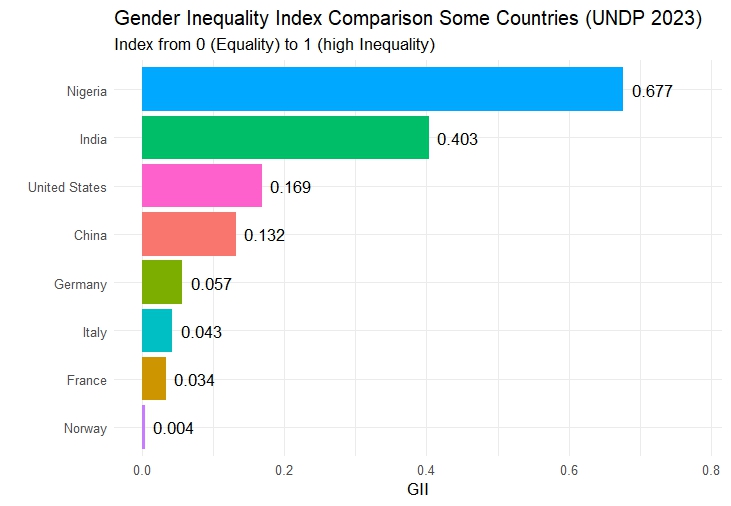
Formally, Amira is free. Socially, she is confronted with two images of freedom simultaneously: her own veiling, which she perceives as her own free choice, and the views of the society in which she lives, which often signal the exact opposite. And internally, her desire for self-determination merges with the need for belonging. So, is Amira free?
Matthias
Matthias is 42, lives in a mid-sized city, and works in a senior management position. He earns a good salary, makes decisions, and has built a stable professional standing over many years. He rises early, drives to the office, and often stays late. For him, taking on responsibility is simply part of the job. He sees himself as someone people can rely on. His family relies on him. So do his colleagues. If you asked him if he is free, he probably wouldn’t think twice. Of course he is. He has carved out his own path, made his own decisions, and set his own priorities.
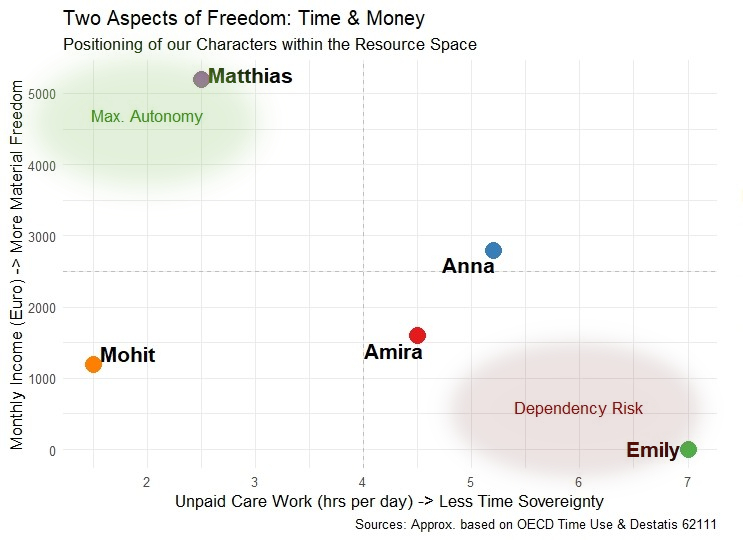
Statistically speaking, as a high-earning white man in the West, Matthias is likely to stand at the very top. Who is free, if not him? While he was building his career, his wife gave birth to two children. She still handles the majority of the care work. Formally, he has every opportunity available to him. He could change jobs, cut back his hours, or take a different path. Yet here, too, the question of the price of deviation arises.
If Matthias decided to step back, stay home more often, or delegate responsibility, it could violate expectations. At work, his commitment might be questioned, and his position could lose its weight. In his private life, the image others have of him and the image he has of himself, would shift. Matthias grew up with clear ideas of masculinity. Be reliable, function, solve problems instead of talking about them, and show strength even when things get exhausting.
These expectations do not only come from the outside, they have become part of his self-image. When something weighs on him, he rarely speaks about it, not because it is forbidden, but because it doesn’t feel right. Because he learned that weakness has no place. That one perseveres. He doesn’t question his role as the provider, either. It gives him a sense of purpose, but it also binds him. A step back would be possible, but it would feel like a loss, like failure, rather than an option.
Thus, a form of inner limitation emerges that is difficult to grasp. It does not feel like pressure, but like conviction. Matthias decides for himself. And yet, he moves within a framework he did not consciously choose, but one he simply grew into. Does that make Matthias someone who is absolutely free?
Can We Ever Be Free?
Freedom cannot be understood as a state one possesses, but as a space that must be laboriously fought for against resistance. In the modern world, unfreedom rarely reveals itself through chains, instead, it is found in how dearly it costs us to make a decision that goes against the norm.
Is it freedom if we “voluntarily” enter into unfreedom, fleeing into old roles to escape social coldness or moral devaluation? Is it truly a decision made from enlightened understanding, or is it a quiet subordination when the fear of failure, the dread of divine damnation, or the worry of losing one’s sense of belonging guides our choice? We often justify our constraints to ourselves so as not to jeopardize the image of the sovereign individual. But as long as we fear the price of deviation, our autonomy remains a compromise.
As long as norms and ingrained role perceptions exist, future generations will also make compromises and will not be able to live in true, absolute freedom. Perhaps, then, we are not as free as we often tell ourselves, but rather, just freer than we were yesterday.
Nevertheless every generation produces a few who see the prison for what it is. And change always depends on how many are willing to pay the price of confronting it. – by Maike Martina Heinrich – April 2026
Title Photo: Ye Jinghan on Unsplash
References:
Brückweh, K. (2015). Menschen zählen: Wissensproduktion durch britische Volkszählungen und Umfragen vom 19. Jahrhundert bis ins digitale Zeitalter (Vol. 76). Walter de Gruyter GmbH & Co KG.
Organisation for Economic Co-operation and Development. (n.d.). Time use database [Data set]. OECD. https://www.oecd.org/en/data/datasets/time-use-database.html
Peuckert, R. (2012). Der soziale Wandel der Rolle der Frau in Familie und Beruf. In Familienformen im sozialen Wandel (pp. 405-449). Wiesbaden: VS Verlag für Sozialwissenschaften.
Statistisches Bundesamt. (2024). Bruttostundenverdienste, Verdienstunterschied: Deutschland, Jahre, Geschlecht, persönliche und berufsbezogene Merkmale (Tabelle 62111-0005). Genesis-Online


Leave a Reply